 English
Views: 0 Author: Site Editor Publish Time: 2026-03-19 Origin: Site
When you invest in a professional CO2 laser machine, you are essentially buying a high-precision thermal engine. RF-excited (Radio Frequency) laser tubes are the gold standard for speed and detail, but they have a major byproduct: extreme heat. Only about 10% of the energy pumped into the gas discharge becomes laser light; the rest turns into thermal energy that can degrade your beam quality and destroy sensitive electronics.
Choosing between water cooling and air cooling is not just a technical detail; it is a fundamental decision that affects your Industrial production capacity. If the cooling fails, the gas density inside the cavity drops, your High precision cuts become jagged, and the lifespan of your expensive RF tube plummets. In this guide, we break down the "Expert Insight" into these two systems. We will help you understand which thermal management strategy fits your CNC workflow, your environment, and your power requirements.
The physics inside an RF-excited CO2 laser machine are intense. To create a laser beam, an RF electric field excites a mixture of gases—primarily Carbon Dioxide, Nitrogen, and Helium. This process generates massive amounts of heat. If this heat stays trapped, it creates a "thermal lens" effect that distorts the beam.
A High precision laser depends on consistent gas density. When temperatures rise unchecked, the gas expands and the discharge becomes unstable. This leads to power fluctuations. For a Professional user, this means the laser might cut through a material at the start of a job but fail to penetrate it thirty minutes later. Cooling ensures the output power remains a "flat line" rather than a fading curve.
It isn't just the gas that suffers. The laser window—the optic where the beam exits the tube—can crack under thermal stress. Additionally, the internal RF power amplifier generates its own heat. Without an effective cooling system, these electronic components wear out prematurely. Whether it is a Water cooled setup or a fan-driven air system, the goal is to keep the "thermal equilibrium" stable so your Industrial equipment can run 24/7 without a breakdown.
For any high power CO2 laser machine, water cooling is the preferred choice for thermal stability. It uses a closed-loop system where a liquid coolant (usually distilled water) circulates directly around the laser cavity to pull heat away with maximum efficiency.
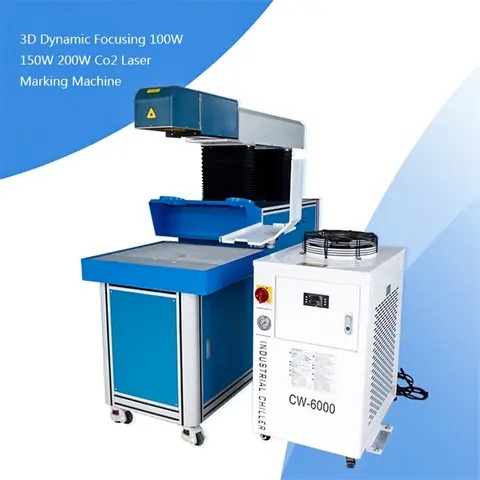
A Water cooled RF laser is typically paired with an external Industrial chiller. This chiller does more than just move water; it actively refrigerates it. It uses a compressor and a heat exchanger to maintain the water at a precise temperature—usually around 20°C to 25°C. This level of control is something air cooling simply cannot match. It allows the CNC operator to work in a hot warehouse while the laser tube stays perfectly cool inside.
In a busy Industrial shop, dust is everywhere. Air cooling systems pull that dust into the machine via fans. A Water cooled system, however, is sealed. The heat is transferred to the water and then moved to the external chiller located away from the primary cutting area. This keeps the sensitive optics of your CO2 laser machine cleaner and reduces the frequency of maintenance. For a Professional shop, this translates to more "up-time" and less "clean-time."
When we talk about "Continuous Workloads," we refer to Industrial shifts that last 8 to 16 hours. In these scenarios, the thermal load on a CO2 laser machine is relentless.
Water has a much higher heat capacity than air. It can absorb a large amount of energy with only a small increase in its own temperature. This makes a Water cooled system much more efficient at "snapping" heat away from the RF tube's core. In a High power 100W or 150W RF laser, air simply cannot move fast enough to prevent a temperature spike during long cutting sessions.
For High precision engraving, "Beam Mode" (the shape and energy distribution of the laser spot) is critical. If the tube gets too hot, the beam mode can shift from a perfect circle to an oval. This ruins fine details. Because a Water cooled system keeps the tube at a near-constant temperature, the beam mode stays locked. This is why Professional engravers who demand perfect photographic results almost always choose Water cooled RF machines.
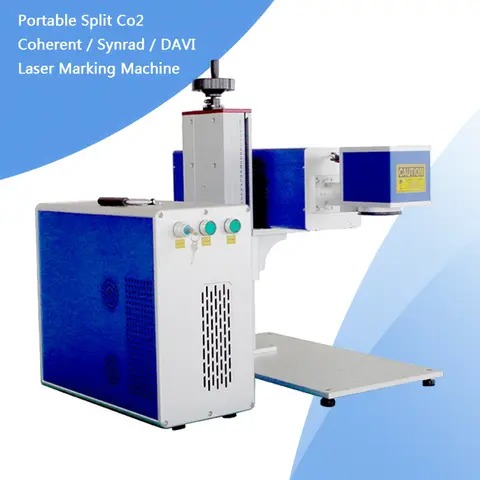
Air cooling represents a different philosophy. It integrates high-velocity fans directly into the housing of the CO2 laser machine. These fans blow air across aluminum heat sinks attached to the RF tube. It is a simpler, more compact approach that eliminates the need for external plumbing.
For many studios and makers, a Water cooled setup is too bulky. An air-cooled CO2 laser machine is "Plug and Play." You don't have to worry about water leaks, changing coolant, or winter freezing risks. It reduces the initial cost of the equipment, making High precision laser technology more accessible to smaller businesses that don't run their machines at High power for ten hours straight.
Air cooling is ideal for machines that need to be moved or used in varied locations. Because there is no external chiller, the footprint is much smaller. However, the CNC operator must be aware that air cooling is "ambient-dependent." If your workshop is 35°C, the air cooling the laser is also 35°C. This means in a hot environment, an air-cooled CO2 laser machine might need to take "rest breaks" to prevent overheating, which is a major consideration for Industrial scheduling.
While air cooling is "low maintenance" compared to a Water cooled system, it is not "no maintenance." The enemy of an air-cooled CO2 laser machine is blockage.
Over time, the fans that cool the RF tube will accumulate smoke residue and dust. This creates an insulating layer on the cooling fins, which acts like a blanket, trapping the heat you are trying to remove. A Professional operator should inspect the fans and heat sinks weekly. Using compressed air to blow out the dust ensures the High precision of the machine isn't compromised by a simple clog.
In an air-cooled CNC setup, you cannot push the machine flush against a wall. It needs "breathing room." If the exhaust air is trapped, the machine will suck its own hot air back in, creating a heat loop. For consistent Industrial performance, ensure there is at least 30cm of clearance around all cooling vents. This simple step can extend the life of your CO2 laser machine by years.
To help you decide which system fits your Industrial needs, we have compiled a comparison of how these systems handle the rigors of a Professional workshop.
| Feature | Water Cooled System | Air Cooled System |
| Cooling Efficiency | Very High (Active Refrigeration) | Moderate (Passive Exchange) |
| Power Support | Best for High power (100W+) | Best for Low/Mid Power (<80W) |
| Footprint | Larger (Requires External Chiller) | Compact (All-in-one) |
| Environmental Sensitivity | Low (Works in hot rooms) | High (Needs cool ambient air) |
| Maintenance Needs | Coolant changes & leak checks | Fan cleaning & dust removal |
| Noise Level | Constant hum from Chiller | Variable fan noise |
As the table suggests, if you are running a Professional CNC service with High power requirements, the stability of a Water cooled system is worth the extra space and cost. If you are a designer focused on smaller, intricate tasks, the air-cooled model offers enough High precision without the complexity.
In the B2B world, the "Return on Investment" (ROI) is everything. An RF laser tube is the most expensive consumable in your CO2 laser machine. Cooling directly dictates how many thousands of hours you get out of that tube.
Heat causes the gas mixture inside the tube to react with the internal surfaces, eventually depleting the CO2. A Water cooled system that keeps the tube at a steady 22°C significantly slows this degradation. By maintaining a lower operating temperature, you can often get 20% to 30% more life out of your High power tube compared to a poorly ventilated air-cooled setup.
The RF power supply is a high-frequency electronic device. Like a computer processor, it hates heat. In a Professional Industrial environment, the electronic failure of the RF power source is often more expensive than the tube itself. Effective thermal management—whether through High-quality fans or a Water cooled jacket—protects these circuits from "thermal runaway," ensuring your CNC operations remain profitable over the long term.
How do you make the final call? It comes down to your specific Industrial application and the environment where your CO2 laser machine lives.
If your business involves cutting thick acrylic or wood for 6 hours a day, you need a Water cooled system. The High power required for deep cutting generates heat that will overwhelm fans. Furthermore, if you are in a tropical climate or a non-air-conditioned factory, an Industrial chiller is the only way to guarantee High precision results year-round.
If you primarily do lightweight engraving or occasional architectural modeling, air cooling is a smart, space-saving choice. It is also excellent for Professional setups in clean, temperature-controlled offices where the ambient air is always 22°C. For these users, an air-cooled CO2 laser machine provides a sleek, low-hassle experience that still delivers High precision output.
The cooling system of a CO2 laser machine is its life-support system. While water cooling offers the ultimate in Industrial thermal stability and High power endurance, air cooling provides a compact and efficient alternative for moderate workloads. Both systems are designed to protect the High precision of your RF tube and ensure that your CNC operations stay on track. By understanding these thermal dynamics, a Professional operator can choose the equipment that minimizes downtime and maximizes the lifespan of their investment.
A: Generally, no. The RF tubes are designed with either a water jacket or cooling fins. A tube designed for air cooling lacks the internal channels needed for water. You must decide on the cooling type when you purchase the Professional machine.
A: A High-quality Water cooled CO2 laser machine is equipped with a "flow sensor." If the water stops moving or gets too hot, the sensor sends a signal to the controller to shut down the laser immediately, preventing a total tube meltdown.
A: Usually, yes. To move enough air to cool a High power tube, the fans must spin at high RPMs, which can be louder than the steady hum of a Water cooled chiller.
I have spent many years analyzing the performance of laser systems in various industrial settings. At our company, we operate a world-class manufacturing facility where we produce the very CO2 laser machine technology discussed in this guide. Our factory is more than an assembly plant; it is a center of precision where we test every Water cooled and air-cooled unit under extreme thermal loads. We use high-grade components to ensure that our Professional equipment maintains High precision even in the most demanding Industrial environments.
